

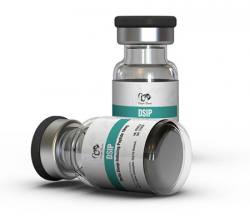
DSIP (Delta sleep-inducing peptide) is a well-known neuromodulator and natural sleep-promoting nonapeptide with many other physiologic functions. It is typically found in the brain and easily passes the blood-brain barrier. It has been discovered and heavily studied for over 40 years.
It has been used for the treatment of poor sleep, pain conditions, stress-related symptoms, low testosterone (via stimulation of LH), and even sometimes as an antioxidant and anti-cancer protein. It exhibits a pronounced stress protective action and decreases stress-induced metabolic and functional disorders in human and animal organisms exposed to a variety of stresses. It has also been shown in research to improve hormone levels and physical performance.
BENEFITS OF DSIP: Can restore disturbed sleep patterns; Can promote LH and GH release; Can reduce persistent/chronic pain; Can modulate cortisol production.
Sleep: DSIP has been described as a sleep-promoting substance rather than a sedative. There is a modulating effect on sleep and wake functions with greater activity in circumstances where sleep is disturbed. There are essentially 5 stages of sleep, these can be broken down into 2 categories REM and NREM sleep. These translate to Random Eye Movement and Non-Random Eye movement sleep. The problem with many sleep aids is that they change the time or duration of these sleep cycles. The problem with this is these cycles are ALL associated with important physiological processes and anabolic hormone production. DSIP does not change these sleep stages. It increases the ability to go to sleep and offers a more restful sleep.
Hormones: It is involved in neuroendocrine regulation and release of anterior pituitary hormones. In humans, DSIP influences the secretion of adrenocorticotropic hormone (ACTH), luteinizing hormone (LH) and growth hormone (GH). It also plays a role in the regulation of circadian rhythms. Administration of DSIP seems to improve the hormone production/regulation in these glands. For example, it increases LH and growth hormone production while decreasing somatostatin. This results in increased production of desirable hormones (LH, GH), and decreased the production of undesirable ones (cortisol and somatostatin).
An evidence-focused introduction
DSIP, short for delta-sleep-inducing peptide, is a small nonapeptide that has attracted scientific interest because of its proposed relationship with sleep regulation and several other physiological processes. It was originally investigated as a possible endogenous sleep-related substance, and early research suggested that it could influence sleep patterns, particularly slow-wave or delta-wave activity. Subsequent investigations have explored its possible effects on sleep quality, stress responses, circadian rhythms, pain, neurotransmitter activity, and other biological functions.
However, an important distinction should be made between scientific interest and established medical effectiveness. Although historical studies reported potentially interesting results, the modern evidence base remains limited, and much of the human research is several decades old. A later scientific review described the relationship between the peptide and sleep as unresolved, noting uncertainty about its natural biological role and the mechanism through which it might act.
For that reason, this product-style overview is intended as an educational description rather than a recommendation to use the compound as a treatment. The information can help readers understand what has been studied, why researchers became interested in it, and what its potential advantages and limitations may be.
What is the peptide?
DSIP is a nine-amino-acid peptide that was isolated and characterized during research into naturally occurring factors associated with sleep. Early experiments suggested that the substance could influence sleep in laboratory animals and potentially affect sleep-related activity in humans. A major review published in Neuroscience & Biobehavioral Reviews described it as a nonapeptide with a molecular weight of approximately 849 and summarized evidence suggesting effects on sleep, circadian activity, neurotransmitter levels, hormonal activity, and other physiological processes.
The original concept was particularly interesting because researchers were looking for biological substances capable of participating in the body’s natural transition toward sleep. Instead of simply producing conventional pharmacological sedation, investigators proposed that the peptide might interact with mechanisms involved in normal sleep regulation.
That distinction remains important. Conventional sedative drugs generally work through defined receptor systems and can produce predictable pharmacological effects. Research on DSIP has not established an equally clear mechanism. A 2006 review emphasized that the proposed sleep-promoting role remains poorly documented and that an identified gene, protein precursor, or specific receptor responsible for its activity had not been established.
Why is it important?
The importance of DSIP research comes primarily from what it may teach scientists about sleep biology rather than from an established therapeutic role.
Sleep is controlled by an intricate interaction involving circadian rhythms, neurotransmitters, hormones, neural networks, environmental cues, and homeostatic mechanisms. Researchers have long searched for biological signals that help coordinate the transition between wakefulness and sleep. The investigation of DSIP formed part of that broader effort.
Early experiments reported changes in sleep architecture and electrical brain activity after administration. Reviews also reported effects involving circadian rhythms, locomotor activity, neurotransmitter concentrations, hormonal systems, and stress-related physiological responses.
This makes the compound scientifically interesting even where therapeutic conclusions cannot yet be justified.
Another reason it remains relevant is that sleep quality affects many areas of human functioning. Adequate sleep contributes to attention, learning, mood regulation, physical recovery, metabolic health, and daytime performance. Consequently, any biological compound that genuinely influences sleep regulation could theoretically be valuable. The challenge is demonstrating that effect reliably, determining how it works, and establishing safety through modern clinical research.
Potential relationship with sleep
Sleep has been the central area of research surrounding DSIP. Early experiments suggested that administration could alter sleep behavior and increase certain forms of sleep activity. A 1981 human study involving six healthy volunteers reported an increase in total sleep time following intravenous administration, along with changes in subsequent nighttime sleep. The investigators reported no classic pharmacological sedation in their small sample.
Other early clinical research examined people with chronic insomnia. One double-blind study involving 16 patients reported some improvements in objective measures such as sleep efficiency and sleep latency. However, the researchers concluded that the statistically significant effects were weak and that short-term treatment was unlikely to provide major therapeutic benefit for chronic insomnia.
This is an important point when evaluating claims about effectiveness.
A positive result from one experiment does not automatically establish a clinically useful treatment. Studies need to be replicated in larger populations, preferably using contemporary randomized controlled trial methods. Researchers also need to determine whether improvements are meaningful to patients rather than merely detectable through laboratory measurements.
Another controlled study involving chronic insomniacs reported changes in total sleep time and non-REM sleep, but the investigators concluded that the improvement had little clinical significance.
Therefore, the available evidence should be described as interesting but inconclusive, rather than as proof of a reliable insomnia treatment.
Could it improve sleep quality?
The potential for improved sleep quality is one of the primary reasons DSIP continues to attract attention. Research has investigated several dimensions of sleep, including sleep latency, total sleep time, sleep efficiency, awakenings, non-REM sleep, REM sleep, and subjective tiredness.
Some historical studies reported favorable changes. For example, one early investigation involving chronic insomniacs described longer sleep duration and fewer interruptions after administration.
Nevertheless, the research is inconsistent.
The scientific literature includes studies where the effects were modest, statistically weak, or difficult to distinguish from placebo or baseline differences. The 2006 review was particularly cautious, describing the proposed sleep-factor hypothesis as weakly supported.
Consequently, DSIP should not be presented as a guaranteed solution for insomnia, poor sleep, or sleep deprivation. The strongest responsible description is that researchers have investigated it as a potential modulator of sleep-related processes, while clinical effectiveness remains uncertain.
Possible effects beyond sleep
Although its name focuses on sleep, research has suggested that DSIP may have broader biological effects. Historical reviews describe potential interactions with circadian rhythms, neurotransmitter concentrations, hormonal systems, pain responses, and stress-related processes.
Researchers have therefore investigated whether the peptide could have applications extending beyond sleep.
Animal experiments, for example, have examined its influence on responses to stress and changes in sleep following stressful situations. Other experimental work investigated possible interactions with opioid withdrawal and pain-related mechanisms.
These findings are scientifically interesting, but animal studies cannot automatically be translated into human medical benefits. Differences between species, doses, metabolism, administration methods, and biological responses can be substantial.
For this reason, claims that DSIP definitively improves mood, reduces pain, enhances recovery, or assists with withdrawal would go beyond what the available evidence can establish.
How effective is it?
The question of effectiveness requires a balanced answer.
There is evidence that DSIP can influence sleep-related outcomes under certain experimental conditions. Some small human studies reported changes in sleep duration, sleep efficiency, sleep latency, or daytime performance. One controlled investigation involving chronic insomniacs reported improvements in night sleep and daytime alertness after repeated administration.
However, other controlled research produced considerably less impressive findings. A separate double-blind study found that the statistically significant effects were weak and concluded that short-term treatment was unlikely to provide major therapeutic benefit.
This variation makes it difficult to assign a dependable percentage or numerical measure of effectiveness.
A 1984 review also reported a non-linear, or U-shaped, dose-response relationship in experimental settings. This illustrates why assuming that “more is better” would be scientifically inappropriate.
Overall, the effectiveness of DSIP remains unproven for routine medical treatment. Its historical research record supports continued scientific interest, but it does not provide sufficient modern evidence to describe it as an established therapy for insomnia or other conditions.
Why the research remains controversial
One of the most important characteristics of DSIP research is that the compound has remained scientifically intriguing while its exact biological role has remained uncertain.
The 2006 review in Journal of Neurochemistry highlighted several unresolved questions, including the absence of a clearly identified DSIP gene, precursor protein, or receptor. The authors also noted that some sleep-promoting effects observed experimentally were associated with structural analogues rather than the original peptide itself.
That distinction is easy to overlook in commercial descriptions.
A compound can have an interesting biological profile without being an approved medicine. Likewise, an experimental analogue cannot automatically be treated as equivalent to the original molecule.
Modern research would ideally establish the compound’s endogenous physiological role, pharmacokinetics, mechanism of action, receptor interactions, optimal formulation, safety profile, and clinical effectiveness. Until these questions are answered, descriptions should remain cautious.
Safety and responsible use
Safety is another area where caution is essential.
Historical human studies were generally small. Some early investigators reported that participants tolerated experimental administration without obvious physiological or psychological adverse effects. However, the absence of serious effects in small historical studies does not establish long-term safety.
There is also a significant difference between a compound being investigated experimentally and being approved as a standardized medicine. Product quality, purity, sterility, formulation, manufacturing standards, route of administration, and storage can all affect safety.
For that reason, readers should not interpret historical clinical studies as evidence that an unapproved commercial peptide product is safe or appropriate for self-administration.
Anyone considering an experimental peptide should discuss the decision with a qualified healthcare professional, particularly when other medications, medical conditions, pregnancy, or sleep disorders are involved.
What makes the compound scientifically interesting?
One of the most compelling features of DSIP research is the possibility that sleep can be influenced through biological signaling rather than solely through conventional sedation.
Early human experiments suggested that participants could experience increased sleep pressure without the classic behavioral sedation associated with some hypnotic drugs.
This observation helped stimulate interest in whether the compound might support physiological sleep mechanisms rather than simply suppressing alertness.
The concept is attractive because healthy sleep involves coordinated changes in brain activity rather than simply turning consciousness off. Slow-wave sleep, circadian timing, sleep pressure, and neurotransmitter activity all interact in complicated ways.
Nevertheless, the scientific uncertainty surrounding the mechanism means that the concept should be viewed as a research hypothesis rather than an established therapeutic principle.
DSIP compared with conventional sleep medications
It is tempting to compare DSIP directly with prescription sleeping medications, but such comparisons can be misleading.
Prescription hypnotics have undergone defined regulatory evaluation for specific indications, with established dosing instructions, contraindications, quality standards, and monitoring requirements. By contrast, the clinical research surrounding DSIP is comparatively small and old, and the compound does not have the same established regulatory status as conventional approved sleep medicines.
This means that describing it as a “natural alternative” or “better replacement” for prescription medication would not be supported by the available evidence.
The most accurate distinction is that DSIP represents an experimental research compound investigated for its possible involvement in sleep regulation, whereas approved medications have undergone a substantially different development and evaluation process.
Current scientific perspective
The historical literature provides a fascinating foundation for understanding why researchers became interested in DSIP. Early studies reported sleep-related effects in animals and humans, while later research investigated possible relationships with circadian activity, hormones, neurotransmitters, pain, and stress.
At the same time, later scientific analysis raised major questions about reproducibility and mechanism. The unresolved nature of these questions is one of the most important aspects of the modern perspective.
In other words, the story is not simply that DSIP “works” or “does not work.” The evidence suggests that the peptide has biological activity under certain experimental circumstances, but the clinical significance and precise mechanism remain uncertain.
That balanced interpretation is much more useful than exaggerated marketing claims.
Frequently asked questions
What does DSIP stand for?
DSIP stands for delta-sleep-inducing peptide. It is a nine-amino-acid peptide originally studied for possible involvement in sleep regulation.
Is DSIP proven to treat insomnia?
No. Although several historical studies investigated it in people with insomnia, the results were mixed. At least one controlled study concluded that short-term treatment was unlikely to provide major therapeutic benefit.
Does DSIP affect sleep?
Research indicates that it can influence sleep-related measurements under certain experimental conditions. However, the magnitude and consistency of these effects vary between studies, and its overall role in human sleep remains unresolved.
Is DSIP an approved sleep medication?
The scientific literature reviewed here does not establish DSIP as an approved mainstream treatment for insomnia. It is better characterized as an experimental research peptide with a history of investigation.
Is DSIP effective for everyone?
There is no adequate evidence to conclude that it is reliably effective for everyone. The human studies have generally been small and dated, and results have not been sufficiently consistent to support such a claim.
Final assessment
DSIP remains one of the more intriguing peptides in the history of sleep research. Its proposed connection with slow-wave sleep, circadian regulation, and other physiological processes explains why researchers have continued to examine it decades after its initial discovery.
The most important potential benefit identified in historical research is its possible ability to influence sleep-related processes. Some human experiments reported increases in sleep duration, improvements in sleep efficiency, changes in sleep latency, and alterations in daytime alertness.
At the same time, other controlled studies found weak or clinically insignificant benefits, and later reviews questioned whether the original sleep-factor hypothesis was adequately supported.
Therefore, the strongest and most scientifically responsible product description is not that DSIP is a guaranteed sleep enhancer or established treatment. Instead, it is an experimental peptide with a fascinating history in sleep research and a potentially important role in understanding biological sleep regulation.
Its effectiveness remains an open scientific question. More modern, larger, well-controlled human trials would be needed to determine whether the promising observations from earlier research translate into meaningful clinical benefits.
For readers interested in the primary literature, PubMed provides useful starting points, including the original reviews and clinical investigations discussed above.
Reviews
There are no reviews yet.