
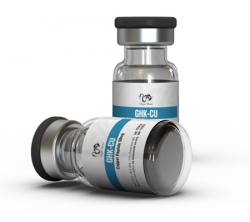
GHK-CU 50 mg 10 ml is a small tripeptide first noticed in human blood. Also known as a ‘metallopeptide’ due to the copper molecules attached to it. GHK levels have been shown to drop with age, leading to reduced healing, skin elasticity, immune system function, overall regeneration, antioxidant capacity and promotion of blood vessel growth.
Studies have suggested that the peptide exhibits potential in gene expression and may to reset elements of the genome. By this potential mechanism, GHK-CU 50 mg 10 ml peptide may restore impaired cells, including carcinogenic cells and COPD cells.
GHK-CU peptide has been researched for its potential across a variety of functions:
May tighten and reverse the thinning of aging dermis
May restore dermis protein barrier and moderate texture, hyperpigmentation and lesions
May support tissue repair and mitigate inflammation
May stimulate increasing hair follicle size
May exert antioxidant properties
May host gene restructuring potential
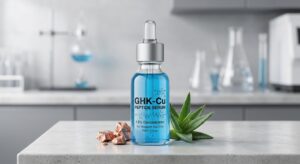
Ultimate Guide to GHK-Cu:
GHK-Cu is one of the most widely researched copper-binding peptides in modern biochemical and dermatological science. Discovered in human plasma, this naturally occurring tripeptide consists of glycyl-L-histidyl-L-lysine complexed with a copper ion ($Cu^{2+}$). Researchers, dermatologists, and biochemical investigators study GHK-CU 50 mg 10 ml for its notable interactions with extracellular matrix remodeling, skin health, tissue repair, and gene expression pathways.
What Is GHK-CU 50 mg 10 ml?
GHK-Cu is a naturally occurring peptide complex that declines significantly in human plasma as part of the aging process. At age 20, human plasma contains roughly 200 ng/mL of GHK-CU 50 mg 10 ml, but by age 60, levels drop to approximately 80 ng/mL. This age-dependent decline has driven substantial scientific interest into how restoring or supplementing GHK-Cu affects cellular signaling and repair mechanisms.
The molecular structure allows the tripeptide to act as a high-affinity carrier for copper, transporting copper ions into cellular environments where they serve as essential cofactors for critical enzymes, such as superoxide dismutase (SOD) and lysyl oxidase (LOX).
Why GHK-Cu Is Scientifically Important
Understanding the biochemical importance of GHK-CU 50 mg 10 ml requires looking at the diverse cellular pathways it influences. Rather than targeting a single receptor, GHK-CU 50 mg 10 ml acts as a signal peptide that modulates gene transcription across broad biological networks.
-
Extracellular Matrix (ECM) Synthesis: GHK-CU 50 mg 10 ml stimulates the production of collagen (Types I, III, and V), elastin, and glycosaminoglycans (such as hyaluronic acid), which are essential structural components of skin and connective tissues.
-
Antioxidant & Anti-Inflammatory Pathways: By enhancing superoxide dismutase activity and downregulating pro-inflammatory cytokines (such as TNF-alpha and IL-6), GHK-CU 50 mg 10 ml helps reduce oxidative damage and cellular stress.
-
Tissue Repair & Angiogenesis: GHK-Cu promotes vessel outgrowth and chemoattraction of repair cells (macrophages and mast cells) to sites of injury, speeding up wound closure and tissue remodeling.
-
Gene Regulation: Research indicates GHK-CU 50 mg 10 ml can upregulate genes responsible for tissue repair while downregulating genes involved in cellular damage and inflammation.
Breakdown of Key Biological Effects
| Biological Area | Mechanism of Action | Observed Research Effects |
| Dermatology & Skin Aging | Stimulates collagen, elastin, and glycosaminoglycan synthesis | Improves skin elasticity, firmness, fine lines, and hyperpigmentation |
| Hair Follicle Health | Enlarges hair follicle size and blocks DHT pathways | Promotes hair growth, density, and follicle anchorage |
| Wound Healing | Enhances macrophage attraction and cell migration | Accelerates skin re-epithelialization and tissue regeneration |
| Cellular Protection | Increases antioxidant enzyme production ($SOD$) | Neutralizes free radicals and decreases oxidative stress |
How Effective Is GHK-Cu?
The effectiveness of GHK-CU 50 mg 10 ml has been documented across numerous preclinical and clinical cosmetic studies:
-
Skin Firmness & Elasticity: Clinical trials evaluating topical copper peptide formulations show measurable increases in skin density, thickness, and elasticity compared to placebo creams and standard anti-aging controls.
-
Reduction in Wrinkles: Topical application over 8 to 12 weeks shows significant reduction in the depth of fine lines and improvement in overall skin smoothness.
-
Hair Regeneration: In studies comparing GHK-CU 50 mg 10 ml formulations to standard topical treatments like minoxidil, GHK-CU 50 mg 10 ml demonstrated comparable capabilities in stimulating hair follicle growth and reducing follicle miniaturization.
Key Considerations for Research and Application
When evaluating GHK-CU 50 mg 10 ml for laboratory research or formulations, several factors must be taken into account:
-
Purity & Quality: High-grade GHK-CU 50 mg 10 ml should be supported by a batch-specific Certificate of Analysis (COA) confirming high purity via Mass Spectrometry (MS) and High-Performance Liquid Chromatography (HPLC).
-
Formulation Stability: Copper peptides are sensitive to strong acids, pure ascorbic acid (Vitamin C), and chelating agents, which can break the peptide-copper bond and reduce stability.
-
Concentration Ranges: Typical topical concentrations used in dermatological research range between 0.05% and 2.0%, depending on the target tissue and application frequency.
Scientific and Regulatory Resources
For further authoritative reading on peptide research and regulatory standards, consult the following resources:
-
Research peer-reviewed studies on peptide synthesis and copper complexation directly on the PubMed Biomedical Literature Database.
-
Review regulatory guidance on compounding and topical research ingredients at the U.S. Food and Drug Administration.
GHK-Cu remains one of the most promising copper peptides in regenerative science, offering a unique combination of matrix remodeling, anti-inflammatory support, and gene-modulating properties.
Unlocking Cellular Regeneration, Skin Elasticity, and Advanced Tissue Repair
The world of peptide science has undergone a monumental shift toward understanding biological signal molecules. Among these, GHK-Cu stands out as one of the most thoroughly documented tripeptides in biochemical literature. Originally isolated from human plasma by Dr. Loren Pickart in 1973, GHK-Cu (glycyl-L-histidyl-L-lysine bound to a divalent copper ion, $Cu^{2+}$) serves as a naturally occurring complex with profound regulatory capacity.
As humans age, systemic concentrations of this vital copper peptide decrease substantially. Plasma levels drop from approximately 200 ng/mL at age 20 to nearly 80 ng/mL by age 60. This age-dependent decline directly correlates with reduced tissue repair capacity, loss of dermal thickness, slowed wound healing, and impaired extracellular matrix maintenance. Consequently, evaluating the mechanics and effectiveness of GHK-Cu has become a central focus for dermatological, anti-aging, and regenerative research.
The Biochemistry of GHK-Cu: How the Copper-Binding Tripeptide Functions
To understand why GHK-Cu exerts such extensive cellular control, one must examine its molecular architecture and transport mechanism. Free copper ions within physiological systems can generate oxidative stress if unchelated; however, when complexed into the tripeptide structure, copper is safely and efficiently transported into targeted cell environments.
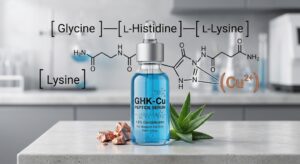
Upon entering cellular spaces, GHK-Cu acts as an essential cofactor for critical enzymes:
-
Lysyl Oxidase (LOX): Crucial for cross-linking collagen and elastin fibers to maintain structural skin integrity.
-
Superoxide Dismutase (Cu/Zn-SOD): A major antioxidant enzyme that neutralizes damaging superoxide radical anions.
Furthermore, genomic studies using the Broad Institute’s Connectivity Map revealed that GHK-Cu can modulate the expression of over 4,000 human genes—upregulating pathways associated with repair and downregulating pro-inflammatory markers.
Evaluating the Clinical Effectiveness of GHK-Cu
The effectiveness of GHK-Cu across topical, sub-dermal, and experimental models is well-substantiated by preclinical and human clinical trials.
1. Extracellular Matrix Reconstruction
In clinical cosmetic trials on aged and photo-damaged skin, formulations containing GHK-Cu consistently outperformed control vehicles and comparative ingredients. Research by Badenhorst et al. demonstrated that topical copper peptides produced a 31.6% greater reduction in wrinkle volume compared to standard peptide formulations like Matrixyl 3000.
2. Accelerated Tissue Regeneration
GHK-Cu exhibits a unique ability to accelerate healing while preventing abnormal scar tissue formation. It downregulates excessive pro-fibrotic signaling (such as TGF-$\beta 1$) while upregulating decorin, an organizing proteoglycan that ensures orderly collagen assembly.
3. Hair Follicle Enlargement
Studies focusing on follicular health indicate that GHK-Cu supports microvascular circulation around hair follicles. In comparative animal and human tissue models, the peptide demonstrated efficacy comparable to 5% minoxidil in stimulating hair follicle proliferation and increasing overall hair thickness.
Reviews
There are no reviews yet.