

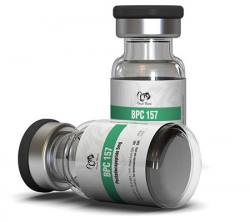
BPC 157 5mg is a small peptide made up of 15 amino acids, which are the building blocks of proteins. The peptide is derived from a portion of body protection compound (BPC) that is produced naturally by cells found in the stomach.
The discovery that the peptide demonstrated strong organ protective and direct cell protection lead to it being developed further. Additional studies later revealed that treating with BPC 157 results in the healing of many different tissues, including skin, muscle, tendon, ligament and bone in animal studies. Studies also show that the effect of BPC 157 is long lasting due to the stability of the pentadecapeptide.
BPC 157 will enhance the effects of human growth hormone by increasing the availability of the human growth hormone receptor. Therefore, using BPC 157 in combination with other peptides that increase the availability of human growth hormone will potentiate these effects.
The reported half-life of BPC 157 is around 4 hours; therefore, the peptide can be dosed daily. Both oral and subcutaneous administration of BPC 157 have benefits since the peptide is highly stable through the digestive tract. However, if buying BPC 157 for muscle and tendon repair, local subcutaneous or intramuscular injection is recommended for optimal results.
BPC 157 peptide side effects are minimal when used at the correct dose, although headaches have been reported in a small number of individuals.
Peptides although stable at room temperature for 3 months, should be stored dessicated below -18 degrees celsius. Upon reconstitution of the peptide it should be stored at 4 degrees celsius between 2-21 days and for future use below -18 degrees.
BPC 157 has attracted considerable attention in regenerative medicine, sports-medicine research, and peptide science because of its intriguing effects in laboratory models of tissue injury and inflammation. It is a synthetic pentadecapeptide associated with a fragment of gastric protein and has been investigated for potential effects involving tissue protection, blood-vessel formation, inflammation, and repair.
Interest in this peptide has grown particularly among people researching muscle, tendon, ligament, joint, and gastrointestinal recovery. However, an important distinction must be made between promising laboratory findings and proven clinical effectiveness. Current evidence is dominated by animal and laboratory studies, while human research remains small and preliminary. A 2025 systematic review identified 36 relevant studies, of which 35 were preclinical and only one was a clinical study within the review’s inclusion set.
This makes the subject particularly interesting—but it also means responsible product information should describe what researchers have actually demonstrated rather than presenting experimental findings as established medical benefits.
What Is This Peptide?
BPC 157, commonly expanded as “Body Protection Compound 157,” is a synthetic peptide consisting of 15 amino acids. Researchers have investigated it for biological activities that may influence tissue repair, inflammatory signaling, vascular function, and gastrointestinal protection.
The peptide became especially interesting because experimental research has reported activity across several different tissues. Investigators have studied models involving muscle, tendon, ligament, bone, gastrointestinal tissue, and other systems. Reviews of the literature have proposed that its effects may involve pathways associated with angiogenesis, nitric oxide signaling, fibroblast activity, collagen production, and inflammatory regulation.
That broad biological profile is one reason peptide researchers continue to examine it. Rather than functioning like a conventional painkiller that primarily targets symptoms, experimental research has focused on whether the compound can influence biological processes involved in tissue maintenance and repair.
Nevertheless, it should not be described as a proven regenerative treatment. There is currently insufficient high-quality human evidence to establish its effectiveness for routine medical treatment.
Why Researchers Are Interested in Tissue Recovery
Tissue recovery is a complicated biological process. Following an injury, the body coordinates inflammation, blood flow, cellular migration, extracellular-matrix remodeling, collagen production, and restoration of normal tissue structure.
Researchers have therefore been interested in compounds that may influence several of these processes simultaneously.
Preclinical research suggests that the peptide may interact with pathways involved in vascular development and tissue repair. Experimental models have reported improvements in structural and functional outcomes involving muscles, tendons, ligaments, and bones. The 2025 orthopedic systematic review concluded that these findings are promising but emphasized that the evidence remains largely preclinical.
This distinction matters. An improvement observed in an animal injury model does not automatically mean the same magnitude of improvement will occur in humans. Differences in metabolism, dosage, tissue biology, injury severity, formulation, and study design can substantially change outcomes.
Consequently, the most accurate way to describe the current research is that it provides potential, rather than definitive proof of clinical effectiveness.
Potential Importance for Muscles and Connective Tissue
One of the most discussed areas of research is musculoskeletal recovery.
Muscle, tendon, ligament, and bone tissues have different structures and healing capacities. Tendons and ligaments, for example, have relatively limited blood supply compared with many other tissues, which can make recovery challenging. Researchers have therefore examined whether compounds that influence vascular and cellular repair pathways could potentially support the healing environment.
Experimental studies summarized in recent reviews have reported improvements in muscle, tendon, ligament, and bone injury models. Proposed mechanisms include effects on angiogenesis, fibroblast activity, collagen-related processes, inflammatory signaling, and cellular repair.
These findings help explain why the peptide has become popular in discussions surrounding athletic recovery and musculoskeletal research.
However, popularity should not be confused with clinical validation. The 2025 systematic review found only limited human evidence and specifically noted that clinical safety data were insufficient.
For that reason, people should not interpret laboratory findings as evidence that an unapproved peptide will necessarily accelerate recovery from an injury.
Possible Role in Inflammation and Tissue Protection
Inflammation is another major area of scientific interest.
Inflammation is not inherently harmful; it is an important part of the body’s response to injury. Problems can arise when inflammatory activity becomes excessive, prolonged, or poorly regulated. Researchers have consequently investigated biological compounds that could influence inflammatory pathways while supporting tissue integrity.
Published reviews describe experimental evidence suggesting that the peptide may reduce certain inflammatory cytokines and influence pathways associated with cellular protection. Research has also examined nitric oxide signaling, microvascular integrity, and other mechanisms potentially relevant to tissue repair.
These mechanisms are scientifically interesting because effective tissue recovery requires more than simply reducing discomfort. A healthy repair process involves coordination between inflammatory signaling, blood supply, connective-tissue remodeling, and cellular activity.
Still, mechanistic findings do not establish that a product will produce a meaningful clinical outcome in patients. Controlled human trials are required to determine whether the biological effects observed in laboratory research translate into measurable improvements in real-world medical settings.
What Does the Human Research Show?
The human evidence is currently much more limited than the amount of online discussion surrounding the compound might suggest.
The FDA’s recent review identified a small number of clinical studies involving different routes and experimental uses. These included studies involving healthy participants, people with ulcerative colitis, individuals with knee pain, and participants undergoing investigation for interstitial cystitis. The agency noted that these studies were generally short, involved small numbers of participants, and provided limited safety information.
A 2025 systematic review similarly concluded that clinical evidence is extremely limited. One retrospective musculoskeletal study included 12 patients with chronic knee pain, with seven reporting relief lasting more than six months after an intra-articular injection. However, this was a small retrospective study rather than a large randomized controlled clinical trial.
That distinction is essential when evaluating effectiveness.
A small observational study can generate an important research hypothesis, but it cannot provide the same level of evidence as a well-designed randomized controlled trial. Larger trials are needed to determine whether observed improvements are caused by the intervention itself, natural recovery, placebo effects, differences between patients, or other factors.
Safety and Regulatory Considerations
Safety is perhaps the most important issue to understand before considering experimental peptide products.
The FDA has stated that compounded drugs containing the peptide may present potential risks involving immunogenicity and peptide-related impurities or characterization problems. The agency has also stated that available safety information for proposed routes of administration is limited and insufficient to determine whether compounded products could cause harm in humans.
The FDA’s detailed review found several small clinical studies in which serious adverse events were not reported. However, it emphasized that the studies were short, had small sample sizes, and provided limited information about safety monitoring. Headache and flatulence were among adverse events reported in certain early enema studies.
This is an important example of why “no serious adverse events reported” should not be interpreted as “proven safe.”
A study involving a small number of participants cannot detect uncommon adverse events reliably. Long-term risks may also remain unknown. Manufacturing quality represents another concern when products are obtained from sources that are not subject to the same controls as approved medicines.
The current scientific literature therefore supports caution rather than confident claims about long-term safety.
Effectiveness: What Can Reasonably Be Claimed?
The effectiveness of BPC 157 should be described in terms of evidence strength.
At the preclinical level, the findings are encouraging. Animal studies have reported improvements involving tissue structure, function, and biomechanical characteristics after various injuries. Research has also identified biological activity associated with angiogenesis, inflammatory regulation, and tissue repair.
At the human level, evidence is preliminary. Small studies have investigated different applications, but there are not enough high-quality randomized clinical trials to establish reliable effectiveness for routine treatment.
A 2026 narrative review described the peptide as biologically promising but emphasized major translational barriers, including limited pharmacokinetic characterization, lack of validated formulations, and the absence of completed Phase II clinical trials.
Therefore, the most responsible product description is not that it “guarantees faster healing.” Instead, it is an investigational peptide with promising preclinical research that requires substantially more human evidence.
Why Product Quality Matters
Peptide quality is particularly important when discussing experimental products.
A chemically complex peptide requires appropriate identification, purity testing, stability assessment, and manufacturing controls. Problems such as contamination, incorrect concentration, impurities, degradation, or mislabeling can create risks that are separate from the biological effects of the intended compound.
Recent scientific reviews have highlighted formulation and pharmaceutical-development challenges surrounding the peptide. Researchers have noted that no validated pharmaceutical-grade formulation or standardized clinical dosing regimen has been established.
This means consumers should be cautious about websites that present laboratory products as equivalent to approved prescription medicines.
A reputable educational product description should make the distinction clear: research-grade availability does not mean regulatory approval, and a seller’s claims are not substitutes for clinical evidence.
Who Is Researching It?
The scientific interest surrounding the peptide extends beyond sports recovery.
Researchers have investigated possible applications involving gastrointestinal health, musculoskeletal injuries, wound repair, inflammatory processes, vascular function, and other biological systems. A recent FDA advisory committee agenda specifically identified ulcerative colitis as one of the uses evaluated in its consideration of the substance for potential inclusion in the compounding framework.
That does not mean the peptide has been established as a treatment for ulcerative colitis. It means that the proposed use has been part of regulatory evaluation.
This distinction illustrates how experimental medical products move through scientific development: biological observations generate hypotheses, early human studies explore safety and possible activity, and larger controlled trials are required before reliable clinical conclusions can be drawn.
Important Considerations for Athletes
Athletes should be especially careful.
The orthopedic literature has documented growing interest in experimental peptide use among athletes, but the 2025 systematic review notes that the substance is prohibited in professional sports.
Competitive athletes should therefore check the rules of their governing organization and applicable anti-doping regulations before using any experimental substance.
The fact that a product is marketed online as a “research peptide” does not necessarily make it permissible for competition. Athletes are responsible for understanding the rules applicable to their sport, league, federation, and testing program.
A Balanced Product Perspective
The scientific appeal of this peptide comes from its unusually broad preclinical profile. Researchers have observed effects across multiple biological systems, particularly those associated with tissue repair and protection.
That potential explains why interest continues to grow.
At the same time, the current evidence does not justify presenting the compound as an established treatment or as a guaranteed solution for muscle injuries, tendon problems, joint pain, or other medical conditions.
The strongest available conclusion is more nuanced: laboratory research suggests potentially useful biological activity, while human evidence remains too limited to establish routine clinical effectiveness or long-term safety. Recent reviews consistently emphasize the need for larger, controlled human trials.
For anyone researching peptide science, this makes the compound an interesting subject—but one that should be approached with realistic expectations.
Frequently Asked Questions
Is it an approved medicine?
No. Current literature and FDA materials indicate that it is not FDA-approved for routine therapeutic use.
Does research show that it can support healing?
Preclinical research suggests potential effects on several processes associated with tissue repair, including angiogenesis, fibroblast activity, inflammatory signaling, and vascular function. However, human evidence is insufficient to confirm how effective these effects are clinically.
Is it proven safe for long-term use?
No. Available human studies are small and generally short, and long-term clinical safety has not been adequately established. The FDA has specifically highlighted limitations in the available safety information.
Why is it popular in sports and fitness?
Interest largely comes from preclinical findings involving muscle, tendon, ligament, and bone injury models, combined with widespread discussion of tissue recovery. However, popularity among athletes is not equivalent to proof of effectiveness.
Where can I find reliable information?
Useful starting points include the FDA’s information on compounded BPC-157-related safety concerns and the PubMed systematic review of its orthopedic and sports-medicine research. These sources provide a more evidence-based perspective than promotional claims from peptide vendors.
Final Assessment
BPC 157 represents an intriguing area of regenerative and peptide research. Its experimental profile has generated interest because studies in laboratory and animal models suggest possible effects on tissue repair, vascular function, inflammatory signaling, and protection of several types of tissue.
The potential importance is therefore substantial from a research perspective, particularly for understanding how biological pathways involved in repair might be influenced.
Its clinical effectiveness, however, remains uncertain. Human studies are currently too limited to establish reliable treatment benefits, standardized medical use, or long-term safety. The FDA has also identified concerns surrounding limited safety information, immunogenicity, and the quality and characterization of compounded preparations.
Anyone considering an experimental peptide should therefore separate scientific potential from established medical evidence. The responsible approach is to view the compound as investigational, not as a proven replacement for established medical treatment.


Reviews
There are no reviews yet.