


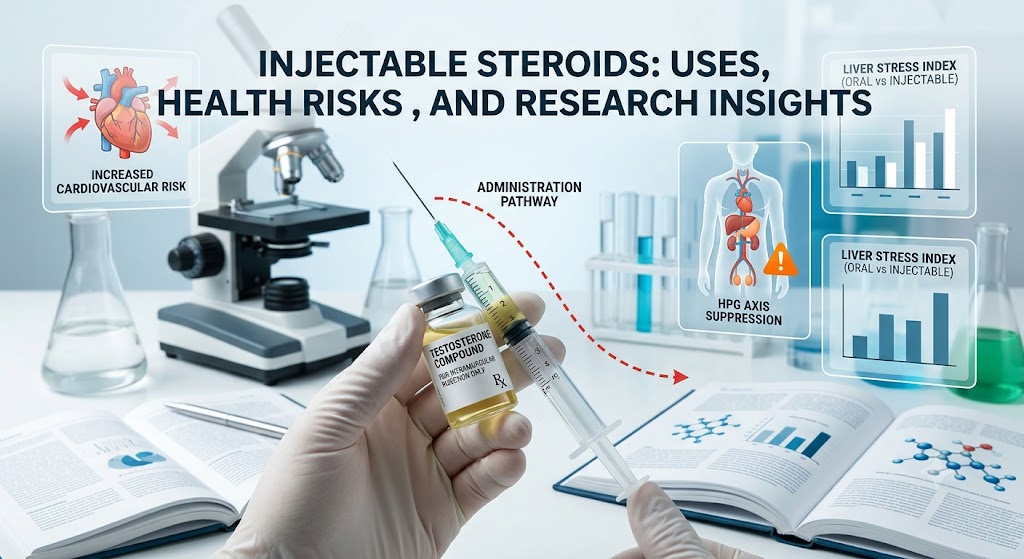
Injectable anabolic-androgenic steroids (AAS) remain one of the most widely discussed topics in sports medicine, endocrinology, and fitness. While often grouped alongside oral performance-enhancing drugs, injectable compounds possess distinct pharmacological profiles, administration protocols, and systemic risks that require careful scientific analysis.
Understanding the full scope of injectable steroids side effects, clinical uses, and physiological risks is essential for making informed decisions regarding hormonal health.
What Are Injectable Steroids and How Do They Work?

Injectable steroids are synthetic derivatives of testosterone designed to mimic the hormone’s anabolic (muscle-building) and androgenic (masculinizing) properties. These compounds are typically dissolved in oil carriers such as sesame, cottonseed, or grape seed oil and administered directly into deep muscle tissue (intramuscularly).
To control the rate at which the body absorbs the active hormone, pharmaceutical manufacturers attach chemical chains called esters to the steroid molecule. Common esters include:
- Short Esters (e.g., Acetate, Propionate): Rapidly released into the bloodstream, requiring frequent administration every 1 to 2 days.
- Medium/Long Esters (e.g., Enanthate, Cypionate, Decanoate): Slower, sustained release over several days to weeks, reducing injection frequency.
Once injected into the muscle tissue, enzymes gradually cleave the ester chain, allowing the free hormone to enter the bloodstream. The hormone then binds to androgen receptors inside target cells, translocating into the cell nucleus to alter gene transcription. This process increases protein synthesis, nitrogen retention, and red blood cell production.
Clinical Medical Indications vs. Non-Medical Misuse
The medical utility of injectable steroids is defined by strict diagnostic criteria, whereas non-medical misuse relies on self-administered supraphysiological dosages.
| Parameter | Medical Indication | Non-Medical Misuse |
| Primary Goal | Restore normal physiological function or treat tissue wasting | Maximize muscle hypertrophy and athletic performance |
| Typical Dosage | Low to moderate therapeutic doses (e.g., 50–200 mg/week) | Extremely high doses (often 500–2,000+ mg/week) |
| Administration | Physician-monitored single-compound protocols | Unsupervised multi-compound “stacking” cycles |
| Oversight | Regular blood panels, blood pressure monitoring, medical supervision | Self-directed, relying on underground forum advice |
Physicians legally prescribe injectable androgen therapy for specific health conditions:
- Male Hypogonadism: Primary or secondary testicular failure causing deficient natural testosterone production.
- Delayed Puberty: Adolescent hormonal deficiencies requiring temporary intervention.
- Cachexia and Severe Wasting: Muscle loss associated with HIV/AIDS, end-stage renal disease, or terminal cancers.
- Refractory Anemias: Historical use to stimulate erythropoiesis (red blood cell formation).
Primary Injectable Steroids Side Effects on Heart Health
Cardiovascular strain represents one of the most serious long-term injectable steroids side effects. Even without passing directly through the liver, injectable androgens significantly alter cardiovascular biology.
Lipid Profile Disruption
Injectable steroids suppress High-Density Lipoprotein (HDL)—the “good” cholesterol responsible for removing plaque from arteries while simultaneously elevating Low-Density Lipoprotein (LDL). This shift accelerates atherogenesis, the buildup of fatty plaque within arterial walls.
Left Ventricular Hypertrophy (LVH)
High concentrations of circulating androgens stimulate androgen receptors directly in cardiac muscle tissue. Over time, this causes pathologically abnormal thickening of the heart’s left ventricle. Left ventricular hypertrophy impairs the heart’s ability to pump blood efficiently, dramatically increasing the risk of arrhythmias, heart failure, and sudden cardiac arrest.
Hypertension and Polycythemia
Injectable steroids increase renal sodium retention and stimulate erythropoietin (EPO) production. Higher red blood cell volume (polycythemia) thickens the blood (increased hematocrit), forcing the heart to exert greater force to circulate fluid. This combination leads to chronic high blood pressure and an elevated risk of blood clots, deep vein thrombosis (DVT), and stroke.
Endocrine System Suppression and Natural Testosterone Shutdown
The human endocrine system regulates hormone production through a delicate feedback loop called the Hypothalamic-Pituitary-Gonadal (HPG) axis.
![[Hypothalamus] --> Releases GnRH
│
▼
[Pituitary Gland] --> Releases LH & FSH
│
▼
[Testes / Gonads] --> Produces Natural Testosterone](https://roidsvault.com/wp-content/uploads/2026/08/Injectable-Steroid-usses-Health-Risks-and-What-the-Research-Says.jpg)
When an individual introduces synthetic injectable steroids, circulating androgen levels rise drastically. The hypothalamus detects this abundance and stops releasing Gonadotropin-Releasing Hormone (GnRH). Consequently, the pituitary gland ceases production of Luteinizing Hormone (LH) and Follicle-Stimulating Hormone (FSH).
Without LH signaling the Leydig cells in the testes to produce testosterone, endogenous production completely shuts down. Key physiological consequences include:
- Testicular Atrophy: Physical shrinkage of the testes due to the cessation of Leydig cell function.
- Infertility: Suppression of FSH inhibits spermatogenesis (sperm production), leading to temporary or permanent azoospermia.
- Post-Cycle Hormonal Crash: Upon discontinuing injections, endogenous testosterone levels remain at zero while synthetic compounds clear the body, leaving the individual in a state of severe hypogonadism characterized by fatigue, muscle loss, elevated cortisol, and depression.
Injectable Steroids vs. Oral Steroids: Comparing Liver Toxicity
A common point of comparison in performance-enhancing literature is the difference in hepatic (liver) impact between oral and injectable administration routes.
| Toxicological Marker | Oral Steroids | Injectable Steroids |
| First-Pass Metabolism | Yes (passes directly through the portal vein to the liver) | No (bypasses direct first-pass liver metabolism) |
| Chemical Modification | C17-Alpha Alkylated to survive digestion | Esterified in oil suspension |
| Liver Enzyme Elevation (AST/ALT) | Severe and rapid elevation common | Generally low to minimal direct elevation |
| Risk of Cholestasis / Peliosis | High risk under prolonged use | Significantly lower acute risk |
Oral steroids undergo C17-alpha alkylation, a structural modification that prevents the liver from breaking down the compound during digestion. This structural alteration places massive chemical stress on hepatic tissue, frequently leading to elevated liver enzymes, cholestasis (blocked bile flow), and peliosis hepatis (blood-filled cysts in the liver).
Injectable steroids bypass first-pass liver metabolism by absorbing directly from muscle tissue into systemic circulation. While this significantly lowers acute hepatotoxicity compared to oral tablets, injectable steroids are not completely benign; extreme dosages can still exert secondary metabolic strain on liver tissue over extended periods.
Injection-Site Complications: Infections, Abscesses, and Tissue Damage
Unlike oral medications, injectable steroids require invading the skin barrier using hypodermic needles. Non-clinical administration frequently results in mechanical and biological complications at the injection site.
- Bacterial Infections and Abscesses: Non-sterile injection protocols, unwashed skin, or contaminated oils can introduce bacteria such as Staphylococcus aureus deep into muscle tissue. This often forms painful, pus-filled intramuscular abscesses requiring surgical drainage and intensive antibiotic therapy.
- Sterile Abscesses: A localized inflammatory reaction to high concentrations of benzyl alcohol or benzyl benzoate (solvents used in steroid preparation) or an inability of the body to absorb large oil volumes.
- Nerve Injury and Tissue Necrosis: Improper anatomical targeting (e.g., striking the sciatic nerve in the gluteal region) can cause localized paralysis, persistent neuropathy, and chronic pain. Repeated injections into the same muscle site also cause extensive scar tissue formation (fibrosis).
Psychological and Behavioral Effects of Long-Term Injectable Use
The central nervous system contains high concentrations of androgen receptors, meaning supraphysiological hormone exposure directly influences brain chemistry and behavior.
- Emotional Volatility and Aggression: High levels of circulating synthetic androgens disrupt neurotransmitter balance (including serotonin and dopamine), leading to heightened irritability, sudden impulsivity, and aggressive outbursts.
- Mood Disorders and Paranoia: Users frequently report severe anxiety, mania, or feelings of invincibility while on cycle, which can pivot into severe paranoia and sleep architecture disruption.
- Withdrawal-Induced Depression: When exogenous injections cease and internal testosterone is suppressed, the sharp drop in androgen levels triggers major depressive symptoms, severe lethargy, and loss of motivation, creating a psychological dependence on continuing the injections.
Underground Sourcing, Purity Issues, and Contamination Hazards
Because non-prescribed anabolic steroids are classified as controlled substances in most jurisdictions, the vast majority of non-medical injectable compounds are manufactured in unregulated underground laboratories (UGLs).
This lack of regulatory oversight creates severe health risks:
- Heavy Metal Contamination: Industrial equipment used in clandestine labs can leach toxic heavy metals (lead, nickel, arsenic) into the carrier oils.
- Incorrect Dosing: Independent chemical testing frequently reveals that UGL products are significantly under-dosed, over-dosed, or mislabeled with entirely different, cheaper compounds.
- Microbial Endotoxins: Improper sterilization of oils, vials, or stoppers leaves heat-resistant bacterial endotoxins in the solution, which can trigger systemic inflammatory responses, high fevers, and septic shock upon injection.
Long-Term Health Risks: What Clinical Studies Show
Observational and longitudinal studies on long-term anabolic steroid users consistently highlight cumulative organ damage that may not manifest until years after exposure.
Chronic Kidney Disease (CKD)
Prolonged high blood pressure combined with increased protein turnover and direct androgenic strain on renal tissue can cause focal segmental glomerulosclerosis (FSGS)—a type of kidney scarring that impairs filtration and can progress to renal failure.
Persistent Endocrine Dysfunction
While some individuals recover natural testosterone production through post-cycle therapy protocols, research shows that prolonged high-dose exposure can cause permanent damage to the Leydig cells and hypothalamic signaling pathways, resulting in lifelong hypogonadism.
Increased Mortality Rates
Epidemiological studies comparing long-term AAS users with non-users demonstrate a significantly higher rate of premature mortality, primarily driven by sudden cardiovascular events, stroke, and organ failure.
Evidence-Based, Safe Alternatives for Hormonal and Muscle Health
Achieving optimal physical performance and muscle growth does not require risking severe injectable steroids side effects. Science-backed, legal alternatives offer safe avenues for optimizing natural physiology:
- Physician-Guided TRT: Individuals genuinely suffering from clinical hypogonadism should seek formal evaluation by a board-certified endocrinologist. Legitimate Testosterone Replacement Therapy restores hormones to safe, normal physiological ranges under strict blood monitoring.
- Progressive Overload Training: Structured resistance training utilizing progressive tension, adequate volume, and sufficient recovery remains the single most effective natural stimulus for muscle protein synthesis.
- Precision Nutritional Strategies: Maintaining a balanced caloric intake with adequate high-quality protein (1.6 to 2.2 grams per kilogram of body weight) ensures optimal muscle retention and growth without organ toxicity.
- Evidence-Backed Supplementation: Clinically researched compounds such as creatine monohydrate, vitamin D3, zinc, and magnesium support natural testosterone synthesis, cellular energy, and athletic performance safely.
Prioritizing health requires evaluating the physiological costs of non-medical hormone manipulation. While injectable steroids bypass the severe liver toxicity associated with oral compounds, their impact on the heart, endocrine system, mental health, and overall longevity remains profound. Consulting qualified healthcare professionals and focusing on sustainable, evidence-based training methods remains the safest path to achieving long-term fitness goals.