

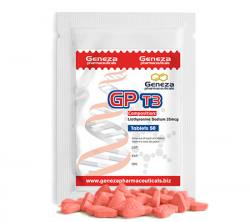
T3 – is the trade name for the drug Liothyronine Sodium. This is not an anabolic steroid, but a thyroid hormone. 1 pill contains active substance: Liothyronine Sodium – 25 mcg
GP T3 is very much liked by bodybuilders, as it helps to burn excess fat in the body. During preparation for a competition, using GP T3, you can significantly reduce body fat in the body without reducing significantly calories.
In medicine, T3 is used in cases of thyroid disease, obesity, metabolic disorders and fatigue. More specifically, this means that it is a pharmaceutical formulation made from natural thyroid hormone, triiodothyronine (T3). Upon receipt of T3, it accelerates the exchange process of substances in patients. The result is increased cell activity, which is expressed in faster processing of carbohydrates, fats and proteins.
Typically, the first day of taking is 1 tablet – 25 mcg, then the dosage is increasing, even taking one tablet every 3 or 4 days, leading to a maximum dosage of 100 mcg. This mode will allow the body to adapt to increased levels of thyroid hormones and avoid disruptions. The daily dose should also be distributed evenly for the reception during the day in order to uniformly keep the hormone levels in the blood. Women are more susceptible to T3 side effects, than men, and therefore should not take more than 50 mcg per day.
A list of GP T3 side effects include (but are not limited to) heart palpitations, agitation, holding of breath, arrhythmia, sweating, nausea, headaches, disturbances in metabolism. This potent hormone, also if used incorrectly, it can lead to serious disturbances in the body. If you are taking T3, then remember that its dosage should be increased slowly.
Not recommended in case of individual hypersensitivity to the drug, heart disease, angina (chest pain), coronary artery disease, congestive heart failure, any type of diabetes or problems with your pituitary or adrenal gland.
There are no registered cases of overdosage. To be store in a dry place, protected from light, at a temperature of 15-25 ° C. Keep out of reach of children.
Manufactured by Geneza Pharmaceuticals, the compound widely known as GP T3 contains liothyronine sodium, which serves as a pharmaceutical-grade replica of the human triiodothyronine (T3) hormone. In clinical endocrinology, medications of this class are prescribed primarily to manage conditions where the natural thyroid gland fails to synthesize adequate hormones, such as primary or secondary hypothyroidism. However, within specialty fitness communities and athletic circles, GP T3 is frequently discussed for its profound capacity to influence overall energy expenditure, dictate metabolic velocity, and assist in aggressive physique conditioning phases.
Endocrine Mechanics and Cellular Action
To fully comprehend how GP T3 interacts with human physiology, one must review the natural mechanisms of thyroid regulation. While the thyroid gland secretes both thyroxine (T4) and triiodothyronine (T3), it is the active T3 hormone that directly governs cellular oxygen consumption, thermogenesis, and basal metabolic rate across virtually every tissue. Unlike T4—which functions largely as a pro-hormone requiring enzymatic conversion in peripheral organs—GP T3 delivers the active hormone directly to cellular receptors. According to clinical insights published by the Mayo Clinic Guide on Liothyronine Oral Route, introducing exogenous active thyroid hormone accelerates carbohydrate, lipid, and protein turnover, creating an immediate upregulation in cellular energy processing and core body temperature.
Metabolic Acceleration and Physique Conditioning
Athletes and bodybuilders managing strict, low-calorie diets often experience metabolic slowdowns as the body attempts to conserve energy. The strategic administration of GP T3 acts as a powerful driver to counteract this adaptive drop in daily caloric expenditure. By artificially maintaining elevated circulating levels of active T3, the body continues to oxidize stored lipids at an accelerated rate even during deep caloric restrictions. Because of its fast-acting nature, GP T3 is frequently integrated into short-term cutting cycles by competitive individuals seeking to eliminate stubborn fat deposits and achieve optimal muscular definition before an event.
Administration Protocols and Pharmacokinetics
Because the active ingredient possesses high biological potency and a relatively short half-life, dosing protocols for GP T3 demand strict mathematical precision. In medical environments, therapy typically begins at a minimal dose—such as 25 mcg daily—and is adjusted slowly over several weeks based on patient response and laboratory assays. In unregulated athletic environments, users often adopt a pyramid dosing schedule, starting low, peaking at a predetermined maximum threshold, and subsequently tapering down to allow natural thyroid function to recover. Failing to taper properly can lead to a temporary post-cycle hypothyroid state where endogenous hormone production remains sluggish.
Potential Adverse Effects and Risks
Overtreatment or reckless misuse of GP T3 can easily precipitate an artificial state of hyperthyroidism, which carries significant health hazards. As detailed in the official DailyMed Monograph for Liothyronine Sodium Tablets, excessive doses can lead to severe cardiovascular strain, including tachycardia, heart palpitations, irregular heart rhythms, and increased cardiac contractility. Other common symptoms associated with excessive levels of GP T3 include severe nervousness, anxiety, hand tremors, excessive sweating, heat intolerance, and unexpected weight fluctuations. Furthermore, chronic over-supplementation can accelerate bone mineral turnover, increasing the long-term risk of osteopenia and skeletal fractures.
The Risk of Muscle Catabolism
A major challenge associated with the use of GP T3 is its lack of tissue selectivity during accelerated fat loss phases. Because an elevated metabolic rate increases total energy demands, the body may catabolize lean muscle tissue for fuel if dietary protein intake is not meticulously optimized. Consequently, individuals utilizing GP T3 for aesthetic or athletic enhancement typically combine it with supportive anabolic compounds and high-protein regimens to safeguard hard-earned muscle mass from being stripped away during aggressive dieting cycles.
Regulatory Status and Manufacturing Standards
It is essential to acknowledge the legal boundaries and quality control considerations tied to this substance. Prescription thyroid medications are strictly regulated in most countries and require professional medical supervision to obtain legally. Because GP T3 is manufactured by underground laboratories rather than major commercial pharmaceutical corporations, the final products bypass standard FDA oversight and quality control inspections. This introduces inherent variables regarding precise tablet dosing accuracy, sterility, and ingredient purity.
Final Summary and Outlook
Ultimately, GP T3 remains one of the most potent metabolic agents capable of altering human energy expenditure and fat oxidation pathways. While its efficacy in manipulating metabolic rate is well-documented, the narrow margin of safety requires profound caution, continuous monitoring of vital signs, and rigorous medical oversight. Anyone exploring the application of GP T3 must carefully weigh the severe cardiovascular and endocrine risks against their intended personal objectives.


Reviews
There are no reviews yet.