

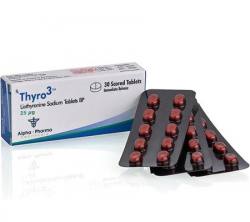
Thyro3 is the synthetic form of T-3/Liothyronine and was a commonly known trade or brand name among athletes. T-3 (Liothyronine) is used as a form of thyroid hormone therapy. Most bodybuilders favored this drug over synthetic forms of T-4 (Levothyroxine) due to its vastly superior activity level.
The abuse of synthetic Thyro3 will result in severe suppression of natural (endogenous) thyroid function. This is especially true of this drug because it actually circumvents the normal thyroid hormone manufacturing process the body utilizes to produce endogenous forms as required. Simplified this is because Thyro3 is the most potent thyroid hormone so the body shuts down each level required for production to try to reduce circulatory Thyro3 levels. Of course this does not reduce the level if the hormone is being administered exogenously (from outside the body).
Since long term use of Thyro3 will lead to thyroid function suppression the issue of rebound should be briefly discussed. It is commonly stated that synthetic thyroid hormone abuse will lead to permanent thyroid gland dysfunction.
Thyroid hormones are naturally synthesized in our body, but since the molecules are not complex, many pharmaceutical companies make the synthetic variety of the hormones. There are two basic types of thyroid hormones- T4 known as levothyroxine and T3 known as liothyronine. Both are manufactured and stored in the thyroid gland. Thyroid hormone from the pharmaceutical companies are obtained in 2 ways. Either derived from animal thyroid gland (bovine or ovine sources) or made synthetic.
Thyroid hormone is easily absorbed from the stomach into the blood stream. The onset of action is quite rapid and usually occurs in a few hours. The peak activity of the hormone, however, may take several days. The thyroid hormone usually stays in the body for a few days after a single administration. One of the reasons why the thyroid hormone stays in the body for a few days is that in the blood it binds to albumin and is protected from breakdown by the liver.
Excess thyroid hormone can cause a wide range of side effects ranging from: headaches, mood alterations- irritability, nervousness, anxiety, sweating, abnormal heart rhythms, palpitations, chest pain, diarrhea, menstrual irregularities, worsening of heart failure, shock. Massive overdosage may result in symptoms resembling thyroid storm. Chronic excessive dosage will produce the signs and symptoms of hyperthyroidism.
Dose range and duration of use: Beginners: not recommended. Hobby: 25-75mcg/day. Professional range: 50-150mcg/day. Women: 25-75mcg/day
Biochemical Mechanism of Liothyronine Sodium
Thyro3 (T3) works by mimicking the body’s active thyroid hormone, increasing cellular metabolism, oxygen consumption, energy expenditure, and thermogenesis. Because T3 is the biologically active thyroid hormone, it has a stronger metabolic effect than T4. Thyroid hormones also influence carbohydrate, fat, and protein metabolism, helping regulate how the body converts nutrients into energy.
Performance and Metabolic Advantages
Athletes and fitness enthusiasts undergoing strict caloric restriction or pre-competition preparation frequently encounter stubborn metabolic plateaus where fat loss slows down drastically. The implementation of Thyro3 serves as a potent biochemical catalyst to break through these barriers. By artificially elevating circulating T3 levels, the user’s daily caloric expenditure scales upward significantly, allowing for steady adipose tissue reduction even when dietary intake is tightly controlled. Furthermore, Thyro3 enhances overall nutrient partitioning and prevents the chronic lethargy frequently associated with prolonged, low-calorie dieting phases. Because of its rapid onset and high potency, Thyro3 is frequently utilized by advanced physique competitors to achieve a hard, dry, and striated look during the final weeks leading up to a show.
Dosage Guidelines and Administration Strategies
Because the active ingredient in Thyro3 is exceptionally strong, dosing parameters must be approached with extreme caution, precision, and careful micro-management. Standard clinical guidance for treating medical conditions typically begins with a low dose that is gradually adjusted based on patient response and blood panel results. Similarly, protocols involving Thyro3 generally start at a minimal level—often a single 25 mcg tablet per day—to assess personal tolerance and minimize adverse cardiovascular strain. Over time, some advanced users may choose to incrementally increase their daily intake, but pushing dosages too high introduces severe physiological risks. Because the active half-life of liothyronine is relatively short, daily administration is required to maintain stable blood plasma levels.
Understanding Potential Risks and Side Effects
Improper use, excessive dosing, or reckless application of thyroid hormones can easily precipitate a state of artificial hyperthyroidism, which carries profound health consequences. Common adverse effects linked to Thyro3 misuse include an elevated heart rate (tachycardia), heart palpitations, severe anxiety, hand tremors, excessive sweating, heat intolerance, sudden weight fluctuations, and sleep disturbances. Furthermore, prolonged or unmanaged use can lead to temporary or long-term suppression of the body’s natural thyroid output, meaning the endocrine system will require a careful tapering period to recover normal function. According to safety data found on resources like DailyMed’s Liothyronine Sodium Monograph, excessive quantities can even cause dangerous cardiac arrhythmias or angina in susceptible individuals.
The Risk of Lean Tissue Loss
One of the most critical challenges when managing a compound like Thyro3 is its lack of target specificity during active weight reduction. While it aggressively burns stored body fat by ramping up the metabolism, an excessively high metabolic rate can also cause the body to catabolize lean muscle tissue for energy if dietary protein intake is not meticulously optimized. For this reason, advanced individuals typically pair Thyro3 with protective agents or strict nutritional strategies to shield hard-earned muscle mass from being stripped away. Without proper dietary oversight and supportive planning, the rapid weight loss achieved can easily result in a depleted, soft physique rather than a hard, athletic aesthetic.
Legal Status and Quality Control
It is vital to recognize the legal and regulatory standing surrounding this substance. In most countries, prescription thyroid medications are strictly regulated and require a licensed physician’s authorization to obtain legally. Because specialty formulations like Thyro3 are frequently acquired through specialized online vendors or international pharmacies, buyers must remain mindful of varying quality control standards and the absence of direct FDA oversight. Anyone considering the acquisition or use of this compound must weigh these legal boundaries, regulatory limitations, and health risks against their intended personal goals.
Final Summary and Outlook
Ultimately, Thyro3 is a profoundly influential metabolic agent capable of dictating the speed of human energy expenditure and fat oxidation. Its capability to alter body composition during strict dieting phases has cemented its status in advanced fitness circles. However, this raw power demands absolute respect, careful mathematical dosing, and rigorous monitoring of vital signs. Because of the delicate nature of the human endocrine system, reckless application can cause permanent disruptions to metabolic health, making thorough pre-planning, cautious execution, and continuous medical supervision essential.

Reviews
There are no reviews yet.